
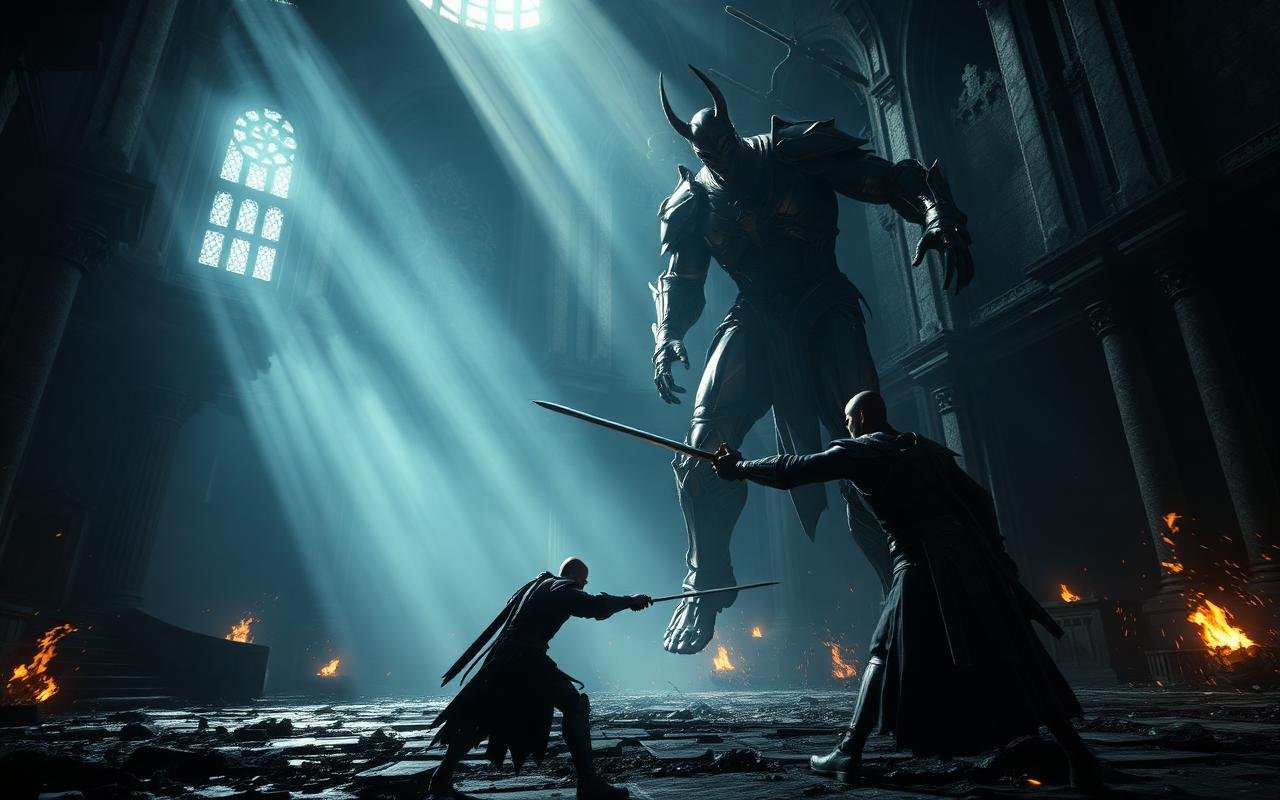
Game Development
Ascent — Action Combat Framework
A data-driven melee and ability combat framework with reactive enemy AI, built as the production foundation for a third-person action title.
Challenge
An existing prototype had responsive-feeling combat but no architecture behind it — every enemy, weapon and ability was bespoke Blueprint logic. Adding a single new enemy took weeks and broke existing behavior.
Objectives
- Replace bespoke combat logic with one extensible framework
- Let designers create enemies and abilities from data
- Keep combat feel identical or better after refactor
- Make the system network-ready for a future co-op mode
Technical Approach
Combat was rebuilt on the Gameplay Ability System: attributes for health, stamina and poise; gameplay effects for damage and status; tags for state gating. Animation-driven hit windows and input buffering preserved the original feel while removing the hardcoded logic behind it. Enemies became data assets composed of an ability set, a Behavior Tree and a tuning profile.
Development
- GAS attribute sets, effects and cue pipeline in C++
- Combo and input buffering layer with cancel windows
- Behavior Tree and EQS-based enemy decision logic
- Boss phase orchestration with telegraphed transitions
- Designer tooling for authoring enemies and abilities
- Sequencer cinematics for boss intros
Key Features
- 01Combo, dodge, parry and poise-break combat
- 02Data-defined enemy archetypes
- 03Perception-driven search and investigation AI
- 04Multi-phase boss encounters
- 05Replication-safe ability execution
Technology Stack
Results
- New enemy archetypes authored in hours instead of weeks
- Combat systems validated in a networked test environment
- Single framework shared by player, NPCs and bosses
Have a project in mind?
Tell us what you're building and we'll help you determine the right technical approach.